Every September, a wave of "iPhone camera review" content goes live before a single reviewer has actually held the phone. We didn't want to add to that pile. Instead, this is a working commercial photographer and videographer's honest read on what the iPhone 18 Pro Max's camera system is expected to offer, grounded in Apple's current, shipping Pro camera architecture and credible, sourced leaks — not invented specs dressed up as a finished review.
At AK Studios, an iPhone Pro has been part of our actual kit for years — not as a gimmick, but for behind-the-scenes content, fast client proofs on set, run-and-gun social cutdowns, and the occasional hero shot when a DSLR rig would have been too slow to set up. That's the lens (pun intended) this guide is written through: not "is this phone impressive," but "does it earn a place next to a Sony or Canon body on a real paid shoot."
So here's what we cover: what's confirmed today on Apple's current Pro camera system, what's credibly rumored for the 18 Pro Max specifically, how that stacks up against dedicated cameras like the Sony A7 IV, Sony FX3 and Canon R6 Mark II, and practical guidance on settings, accessories and storage for creators who end up using one professionally.
Table of Contents
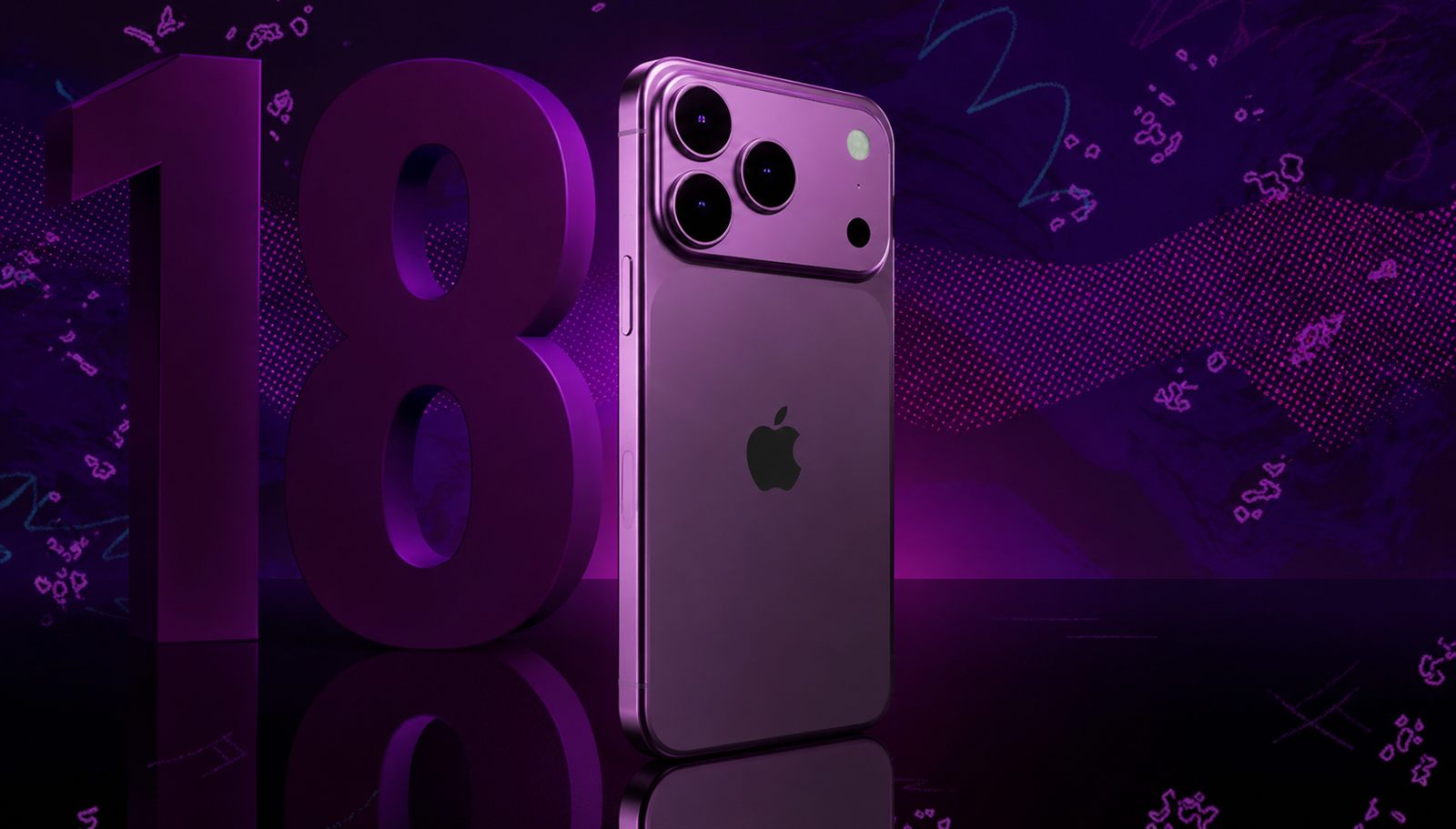
A widely circulated concept render of the iPhone 18 Pro Max's triple-camera layout. Apple has not released official product photography yet.
Camera Overview
Apple's Pro camera architecture has stayed conceptually consistent for a few generations now: a Fusion Main sensor doing most of the work, a wide-angle Ultra Wide for scale and interiors, a compressed Telephoto for portraits and reach, and a computational pipeline stitching all three into one usable system. The 18 Pro Max is expected to keep that structure while refining the parts that matter most to image quality.
Main Camera
Rumored: New Sensor + Variable ApertureLeaked internal diagnostics reported by Notebookcheck point to a new Sony IMX905 main sensor with hardware for a variable aperture — a first for iPhone. Today's 17 Pro Max ships a fixed ƒ/1.78, 24mm Fusion Main sensor.
Ultra Wide
Rumored: UnchangedLeaks point to the Ultra Wide sensor carrying over largely unmodified. The current 17 Pro Max Ultra Wide is a 48MP, 13mm, ƒ/2.2 unit with a 120° field of view.
Telephoto
Rumored: Same Sensor, Refined StabilizationThe telephoto is reportedly carrying the same sensor generation with a 3-axis gimbal-style stabilization actuator. Today's 17 Pro Max Telephoto reaches 100mm (4x) at ƒ/2.8.
Front Camera
Rumored: Possible 24MP JumpAnalyst reporting (JPMorgan, via multiple outlets) suggests a jump to 24MP Center Stage, up from 18MP today — though separate leaked component logs suggest the sensor may carry over unchanged. Sources disagree here.
New Camera Technology
Rumored: Variable Aperture ControlIf variable aperture ships, it would let creators manually trade light intake for depth of field directly in-camera — something no previous iPhone has offered as native hardware.
Confirmed Baseline
Already Shipping (17 Pro Max)ProRes, ProRes RAW, Apple Log 2, Genlock, Dolby Vision HDR, Cinematic Mode and Spatial Video are all live today and near-certain to carry forward, per Apple's own specs.
Camera Specifications
Since Apple hasn't published 18 Pro Max specs, the honest way to present this is side by side: what's confirmed today on the iPhone 17 Pro Max, versus what's credibly rumored for the 18 Pro Max. Treat the right-hand column as a forecast, not a spec sheet.
| Spec | iPhone 17 Pro Max (Confirmed) | iPhone 18 Pro Max (Rumored) |
|---|---|---|
| Main Sensor | 48MP Fusion Main, 24mm | 48MP, new Sony IMX905 (leaked) |
| Main Aperture | Fixed ƒ/1.78 | Variable aperture (unconfirmed) |
| Ultra Wide | 48MP, 13mm, ƒ/2.2, 120° | Largely unchanged (leaked) |
| Telephoto | 48MP, 100mm (4x), ƒ/2.8 | Same sensor gen, refined OIS (leaked) |
| Optical Zoom Range | 2x out, 8x optical-quality in, 16x total | Not yet reported |
| Front Camera | 18MP Center Stage | Up to 24MP (analyst estimate, disputed) |
| Video Resolution | 4K Dolby Vision up to 120fps | Expected to match or exceed |
| RAW Support | Apple ProRAW, ProRes RAW | Expected to carry over |
| Stabilization | Sensor-shift OIS (Main + Tele) | 3-axis gimbal-style tele actuator (leaked) |
| Recording Formats | ProRes, Apple Log 2, Dolby Vision HDR | Expected to carry over, possibly extended |
| Chip | A19 Pro | A20 Pro, 2nm (rumored, +15% faster) |
| Battery (Pro Max) | Up to 39 hrs video playback | ~5,567mAh, larger cell (rumored) |
| Expected Launch | — | September 2026 (unconfirmed) |
Confirmed column sourced from Apple's official iPhone 17 Pro specs page. Rumored column sourced from Notebookcheck and the MacRumors iPhone 18 Pro roundup.
Real-World Camera Performance
Here's how the current-generation Pro camera system performs across the genres professional creators actually shoot — and what the rumored 18 Pro Max changes would mean for each, if they land as reported.
Portrait Photography
Focus and Depth Control on the current system lets you adjust simulated bokeh after the shot in ProRAW, which is genuinely useful for quick headshots and social portraits. A variable aperture main sensor, if it ships, would be the first time that background separation happened optically rather than computationally — a meaningful jump for anyone shooting portraits professionally.
Street Photography
This is where a phone camera's biggest practical advantage shows up: nobody notices it. The compressed telephoto at 100mm-equivalent is already a strong street focal length, and faster, more reliable computational exposure handling would matter more here than raw resolution.
Product Photography
ProRAW files hold up well in post for e-commerce and catalog work, especially under controlled studio lighting. Where a phone still falls short is macro-level detail on small, reflective products like jewelry — sensor size limits what's physically resolvable, no matter how good the computational pipeline is.
Food Photography
Warm, mixed restaurant lighting is one of the toughest real-world tests for any camera, and Apple's white balance and Night mode handling already manage it credibly on the current Pro Max. If the rumored new main sensor improves dynamic range as leaked, it should help recover more detail from bright plating against dark table surfaces.
Travel Photography
This is arguably the single best use case for a Pro iPhone today: no bag to check, no lens changes mid-hike, and a camera that's always in your pocket when the light turns good unexpectedly. The Ultra Wide's 120° field of view already covers most travel and architecture needs without a separate lens.
Landscape Photography
Dynamic range is the limiting factor here, and it's the area where dedicated full-frame sensors still hold a real, physics-based advantage. ProRAW narrows the gap considerably in post, but a phone sensor recovering a blown sky the way a Sony A7 IV can isn't realistic yet, rumored sensor upgrade or not.
Low-Light Photography
Night mode on the current system is genuinely strong for a phone, but it's still computational compositing rather than raw light-gathering. A larger main sensor and variable aperture, if both land as rumored, would be the first low-light gains driven by hardware rather than processing in several iPhone generations — worth watching closely.
Macro Photography
The current Ultra Wide's autofocus-driven macro mode is convincing for product detail shots and close-up B-roll, though it can't match a dedicated macro lens for true 1:1 reproduction. No leaks currently point to a specific macro upgrade for the 18 Pro Max.
Event Photography
Reliable, fast autofocus and forgiving exposure handling in changing indoor light make the current Pro Max a legitimate second/backup camera at events — we've used it exactly this way for candid coverage while a primary body handles formal shots. Battery life is the real constraint on a long event day.
Commercial Photography
For client-facing social deliverables shot on the same day as the event, it's excellent. For resolution-critical commercial work destined for print or large-format display, a full-frame body with genuine lens control remains the safer professional choice.
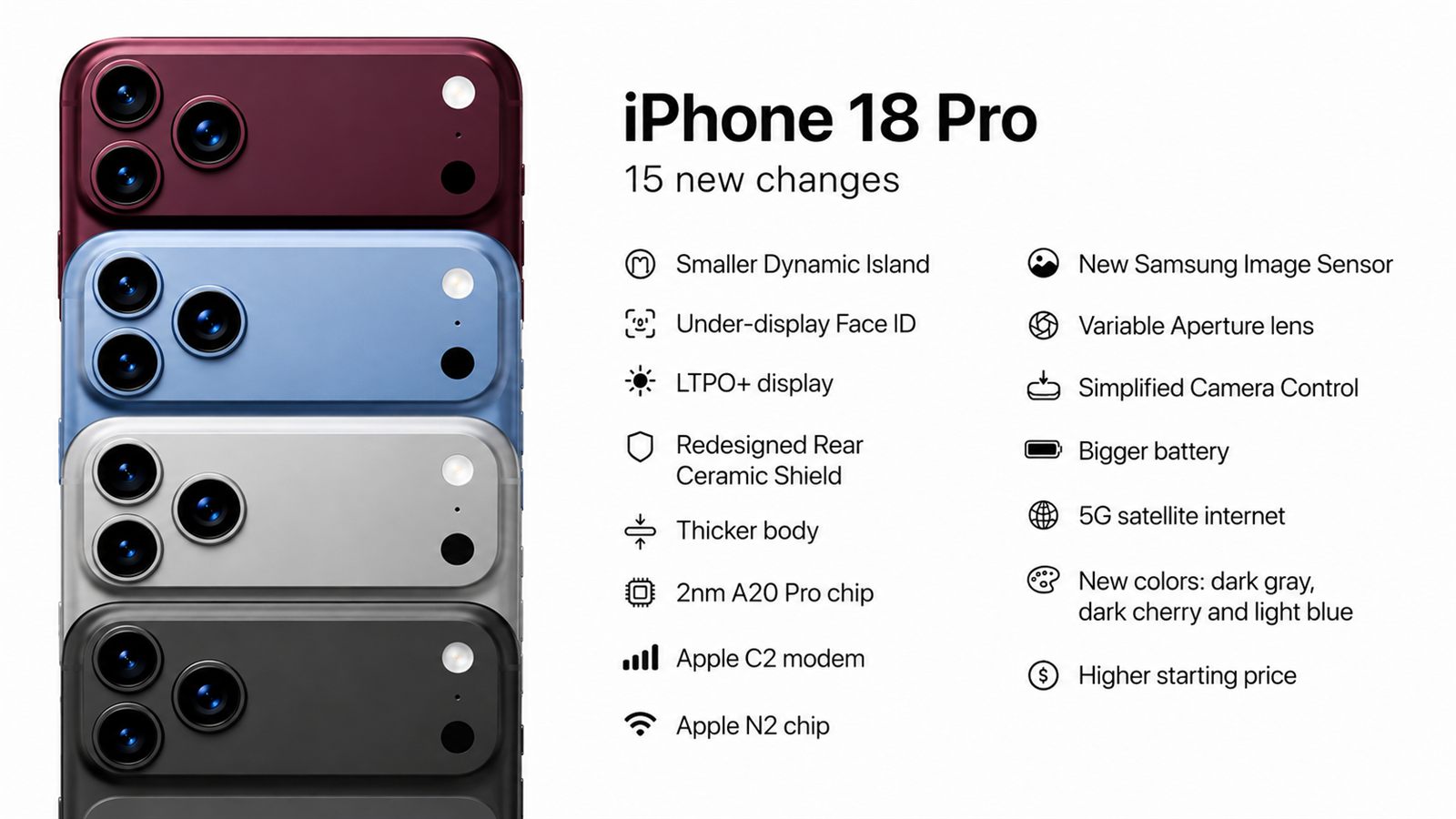
A widely shared rumor-roundup graphic summarizing expected iPhone 18 Pro changes. None of these are Apple-confirmed; treat this as a leak summary, not a spec sheet.
Video Performance
This is where the current Pro camera system is most genuinely professional, and where the 18 Pro Max has the least to prove — it mostly needs to not regress.
4K Recording
Confirmed today: 4K Dolby Vision at 24, 25, 30, 60 and up to 120fps on the current Pro Max, per Apple's specs.
ProRes
Confirmed today: internal ProRes up to 4K120, with ProRes RAW available via the Blackmagic Camera app for full grading control.
Log Recording
Confirmed today: Apple Log 2 with Genlock for multi-camera sync — a real production feature, not a marketing checkbox.
Dolby Vision HDR
Confirmed today: HDR is baked into the standard recording pipeline, not a separate mode, which is genuinely ahead of most mirrorless cameras' out-of-camera HDR handling.
Cinematic Mode
Confirmed today: up to 4K Dolby Vision at 30fps with adjustable, editable rack focus after the shot.
Action Mode
Confirmed today: up to 2.8K Dolby Vision at 60fps, genuinely gimbal-competitive for run-and-gun handheld shots.
Stabilization
Sensor-shift OIS across Main and Telephoto today; leaks point to a refined 3-axis actuator on the 18 Pro Max's telephoto specifically.
Dynamic Range
Strong for a phone today, and the area most likely to improve if the rumored new main sensor and larger pixel architecture materialize.
Audio Quality
Built-in mics are usable for B-roll but not for anything client-facing — budget for an external mic on any paid job, phone or camera.
In real client work, this feature set already covers a surprising amount: BTS content that cuts directly into a Premiere Pro or DaVinci Resolve timeline alongside FX3 footage, Log files with real grading latitude, and HDR delivery that doesn't need a separate export pass. The gaps that remain — true optical zoom, XLR audio input, and battery swapping mid-shoot — are the same gaps every phone camera has, rumored upgrades or not.
Can the iPhone 18 Pro Max Replace a Professional Camera?
Short answer: no, but that's the wrong question. The better question is where it genuinely competes and where it doesn't — measured against real working cameras, not other phones.
| Camera | Sensor | Low Light | True Optical Zoom | Lens Options | Battery | Grading Depth | Portability |
|---|---|---|---|---|---|---|---|
| iPhone 18 Pro Max | 1/1.28"-class (rumored) | Good (computational) | Limited | Fixed, 3 lenses | All-day, no swap | 10-bit Log, real but limited | Best in class |
| Sony A7 IV | Full-frame, 33MP | Excellent | Lens-dependent | Full E-mount range | Swappable | 10-bit 4:2:2 S-Log3 | Moderate |
| Sony FX3 | Full-frame, 12MP | Best in class | Lens-dependent | Full E-mount range | Swappable | 10-bit S-Log3, cinema-grade | Moderate |
| Canon R6 Mark II | Full-frame, 24.2MP | Excellent | Lens-dependent | Full RF range | Swappable | 10-bit Canon Log 3 | Moderate |
Where the iPhone Wins
- Always in your pocket — no bag, no setup time
- Dolby Vision HDR straight out of camera, no extra grading pass
- Shoot, edit and publish from the same device in minutes
- Genlock-synced multi-cam without extra hardware
- Zero learning curve for junior team members or clients
Where Dedicated Cameras Win
- Sensor size — real light-gathering, not computation
- True optical zoom with interchangeable glass
- Swappable batteries for full-day shoots
- XLR audio input for broadcast-grade sound
- Deeper color latitude for heavy commercial grading
In practice, most working creators end up running both — a Sony or Canon body for the shots that need to look flawless in a client deck, and an iPhone Pro for everything that needs to be fast: BTS, verticals, same-day social cutdowns, and backup coverage when the primary camera is tied up. If you want the full picture on the dedicated-camera side, our Sony A7 IV guide and 2026 professional camera buyer's guide cover that half of the kit in detail.
Best Uses for Professional Creators
YouTube
Log footage and reliable autofocus make it a solid B-cam or vlogging-style A-cam for talking-head content.
Instagram Reels
Native vertical capture and Dolby Vision HDR export directly to the format the platform actually wants.
TikTok
Fast turnaround from filming to posting is a bigger advantage here than absolute image quality.
Commercial Ads
Strong for capturing raw footage and social cutdowns; final hero shots still favor a dedicated camera for grading depth.
Corporate Videos
Cinematic Mode and clean autofocus handle interview-style corporate content confidently, especially solo.
Product Photography
ProRAW is genuinely usable for e-commerce catalogs and social product shots under controlled lighting.
Restaurant Photography
Handles warm, mixed indoor lighting well — see our restaurant photography case study for a real example of this workflow.
Real Estate Content
The Ultra Wide's field of view suits interior walkthroughs; pair with a gimbal for smooth room-to-room moves.
Travel Vlogging
The single best use case — no lens changes, no checked bag, always ready when the light changes.
Documentary Filmmaking
Discreet, fast to deploy, and Log-capable for genuine grading in unscripted, moving situations.
Podcast Recording
Strong as a multi-angle video source when paired with a proper external mic setup, not built-in audio.
Behind-the-Scenes Content
Arguably its best professional role today — fast, unobtrusive, and good enough to publish immediately.
Client Social Media
Same-day turnaround from set to a client's Instagram grid, without waiting on a full edit pipeline.
Best Camera Settings
These recommendations are based on the current iPhone Pro camera app, which the 18 Pro Max is expected to inherit largely unchanged.
Photography
Shoot ProRAW for anything client-facing; keep it off for quick social snaps where file size and speed matter more.
Video
4K60 in Apple Log 2 for anything you plan to grade; standard Dolby Vision HDR for content you'll publish with minimal editing.
Social Media
Shoot vertical natively rather than cropping later, and export in standard HDR rather than Log for platforms that don't support a full grading pipeline.
Low Light
Let Night mode run its full capture time on a stabilized surface; avoid Action mode after dark, since it sacrifices too much sensitivity.
Outdoor Shooting
Standard Dolby Vision HDR handles high-contrast daylight well without needing Log's extra grading step.
Indoor Shooting
Apple Log 2 gives you real recovery room in mixed, warm indoor lighting that HDR alone can clip or over-correct.
Best Accessories
Gimbal
A phone-specific gimbal like the DJI Osmo Mobile series smooths handheld moves beyond what in-app stabilization alone can do.
Microphones
A wireless system like DJI Mic 2 or Røde Wireless Pro is non-negotiable for any client-facing audio.
SSD Storage
A compact external SSD (Samsung T-series, SanDisk Extreme) keeps ProRes footage off internal storage on long shoot days.
ND Filters
Clip-on ND filters (PolarPro, Moment) let you keep cinematic shutter angles in bright daylight video.
Tripods
A compact travel tripod covers interviews and locked-off product shots without adding real bulk to a kit.
Lighting
A small LED panel (Aputure Amaran, Godox) fixes the mixed-lighting problem no phone sensor can fully solve on its own.
MagSafe Accessories
MagSafe camera grips and battery packs turn a phone into a much more stable, longer-lasting handheld video rig.
Pros
- Always-ready, pocketable camera with a genuinely professional codec and Log workflow
- Dolby Vision HDR and Cinematic Mode ship as standard, not a paid add-on
- ProRes and ProRes RAW give real grading latitude via the Blackmagic Camera app
- Apple Log 2 with Genlock enables true multi-camera sync on a phone
- If the rumored variable aperture ships, it would be a first-of-its-kind hardware feature on any smartphone
- Fastest path from filming to publishing of any camera in a professional kit
- Doubles as a reliable backup or B-camera on paid shoots
Cons
- Specs remain unconfirmed by Apple as of publishing — anything here could change before launch
- Fixed lenses mean no true optical zoom flexibility
- Sensor size still limits low-light and dynamic-range ceiling versus full-frame cameras
- No swappable battery for full-day professional shoots
- Built-in audio is not client-delivery quality without an external mic
- Price is expected to rise again this generation, per current leaks
Who Should Buy It?
Professionals
Recommended as a second cameraStrong addition to an existing kit for speed and BTS content, not a replacement for a primary body.
Beginners
Strong starting pointGenuinely one of the best ways to learn composition, exposure and video basics before investing in dedicated gear.
Agencies
Worth budgeting for the teamUseful across a team for fast client social content that doesn't need a full production setup.
Content Creators
Excellent primary toolFor creators publishing daily, the speed advantage often outweighs the image-quality gap versus a dedicated camera.
Business Owners
Good for in-house contentCapable enough for a business to produce credible day-to-day content in-house, with a professional stepping in for hero campaigns.
Final Verdict
As a working photographer and videographer, here's the honest read: the iPhone 18 Pro Max sounds like a meaningful but not revolutionary camera update, built on a Pro camera system that's already genuinely professional-grade. If the rumored variable aperture and new main sensor ship as leaked, it would be the most interesting hardware change to iPhone photography in several generations — worth watching, not worth pre-ordering blind.
If you're shooting professionally on an iPhone 15 Pro or older, this generation looks worth waiting for. If you already own a 17 Pro Max, nothing currently reported suggests an urgent reason to upgrade the day it launches — let confirmed reviews from DPReview and DxOMark land first.
Either way, no phone camera changes the fundamentals: lighting, composition and story still matter more than the sensor in your hand. We'll publish a fully updated, hands-on version of this guide with confirmed specs the moment Apple actually announces the device.
Frequently Asked Questions
Is the iPhone 18 Pro Max good for professional photography?
Based on Apple's current iPhone 17 Pro Max camera system, which the 18 Pro Max is expected to build on, yes — for social content, client proofs, product shots and behind-the-scenes work it's already a genuinely capable professional tool. It's not a replacement for a full-frame camera on resolution-critical or heavily cropped commercial work, but as a fast, always-ready second camera it earns its place in a professional kit.
Can the iPhone 18 Pro Max replace a DSLR or mirrorless camera?
No, not fully. It replaces a camera for speed, portability and social-ready delivery, but a dedicated mirrorless body like the Sony A7 IV or Canon R6 Mark II still wins on sensor size, true optical zoom, lens choice, battery swapping and color depth for heavy grading. Most working creators use both rather than choosing one.
Does the iPhone 18 Pro Max shoot ProRes?
Apple hasn't confirmed 18 Pro Max specs yet, but ProRes and ProRes RAW recording has been a Pro-line iPhone feature since the iPhone 13 Pro and remains standard on the current iPhone 17 Pro Max, so it would be a significant surprise if the 18 Pro Max dropped it.
Is the iPhone 18 Pro Max good for filmmaking?
For short-form, documentary-style and social-first filmmaking, yes — Apple Log, Dolby Vision HDR, Cinematic mode and ProRes already give the current Pro Max a genuine grading workflow. For narrative or commercial filmmaking that needs shallow depth of field, true optical compression and multi-camera sync, a dedicated cinema camera still leads.
Is it worth upgrading to the iPhone 18 Pro Max?
If you're on an iPhone 15 Pro or older, the rumored variable aperture and new main sensor make it worth watching closely. If you already own an iPhone 17 Pro Max, most leaks point to modest camera gains this cycle, so waiting for confirmed reviews after the September 2026 launch is the safer call.
When will the iPhone 18 Pro Max be released?
Apple hasn't made an official announcement, but current reporting from MacRumors and Forbes points to a September 2026 keynote (around September 8–9) with retail availability roughly a week and a half later. Treat any specific date as a forecast until Apple confirms it.
Does the iPhone 18 Pro Max have a variable aperture camera?
It's rumored, not confirmed. Leaked internal diagnostics reported by Notebookcheck point to a new main sensor with variable aperture hardware, which would be a first for iPhone. Apple has not confirmed this feature.
Can you shoot Log video on iPhone for professional color grading?
Yes. Apple Log has been available on Pro-line iPhones since the 15 Pro, and the current 17 Pro Max supports Apple Log 2 with Genlock for multi-camera sync, giving editors real grading latitude in DaVinci Resolve, Premiere Pro or Final Cut Pro.
Is the iPhone 18 Pro Max good for YouTube and social media content?
Yes — this is where iPhone Pro cameras are strongest. Built-in stabilization, Dolby Vision HDR straight out of camera, and instant editing and upload on the same device make it one of the fastest paths from filming to publishing for YouTube Shorts, Reels and TikTok.
How much storage do I need on an iPhone 18 Pro Max for professional video?
If you plan to shoot ProRes or Apple Log regularly, budget for at least 512GB internal storage or an external SSD workflow, since ProRes 4K footage can use over 6GB per minute. 256GB is workable for photography-first creators who shoot mostly ProRAW and standard video.
Whatever Camera Ends Up In Your Kit, Results Come Down to the Team Behind It
AK Studios by Asfar Khan delivers commercial photography, product photography, food photography, corporate photography, commercial videography, social media content, brand storytelling and YouTube production across Islamabad and Rawalpindi — on whatever camera system the job actually calls for.